


Cast Iron Hand Wheel
As a professional cast iron hand wheel manufacturer in China, Hangzhou Xiaoshan Chuangye Metal Processing Co., Ltd. specializes in producing durable and precision-engineered hand wheels for industrial applications worldwide.
The company integrates casting, machining, and surface treatment to ensure stable quality and accurate dimensions. Cast iron hand wheels are widely used in valve systems, machine tools, and industrial equipment thanks to their high strength and wear resistance. Chuangye supports full customization, including size, hub type, keyway, handle options, and surface finish, meeting various OEM and ODM requirements.
Under ISO9001:2015 quality management standards, Chuangye delivers reliable products, consistent performance, and dependable lead times to global partners.


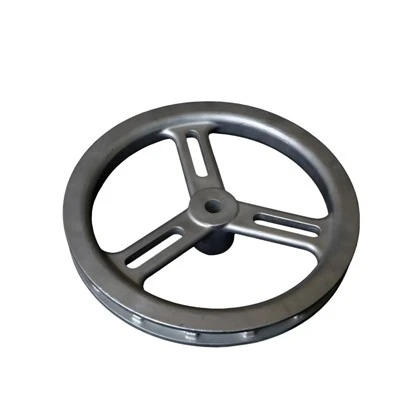


Cast Iron Hand Wheel
Industrial-grade manual operating components for torque transmission and mechanical control.
Product Introduction
Cast Iron Hand Wheel is a manual operating component used in industrial equipment for torque transmission and mechanical control. By rotating the wheel manually, the operator transfers torque to a valve stem, lead screw, or rotating shaft to perform opening, closing, positioning, or linear adjustment functions.
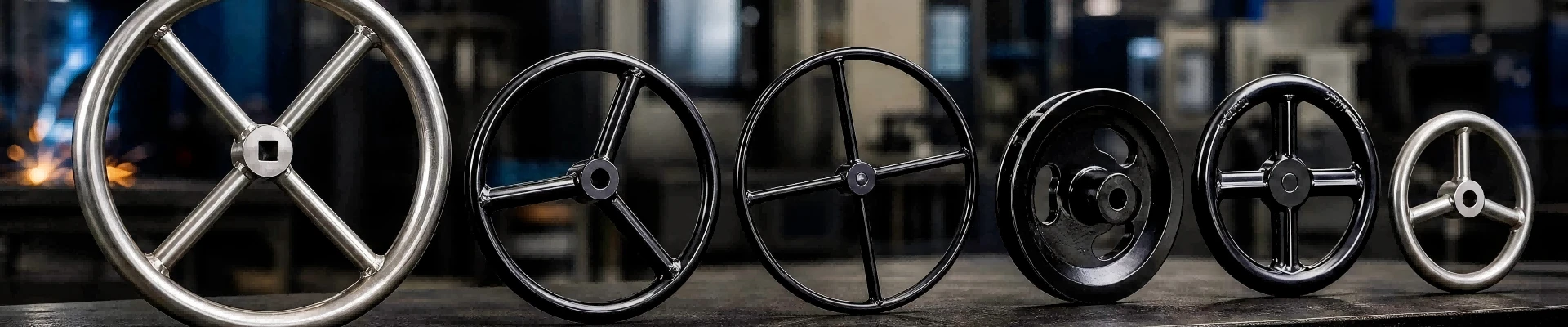
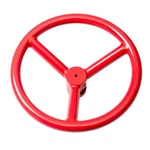
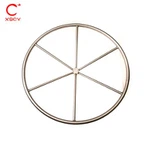
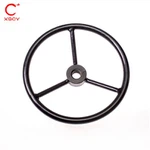
The product is mainly manufactured from cast iron materials, including gray cast iron (HT200, HT250) and ductile iron (QT450-10, QT500-7). The structure generally consists of a rim, spokes, and hub. After casting, the hub area is machined into plain bore, keyed bore, or threaded bore configurations to match different shaft connection requirements.
Cast iron hand wheels are widely used in valve systems, machine tools, fluid control systems, and heavy industrial equipment where manual operation or fine adjustment is required. They are suitable for industrial environments involving high temperature, dust, moisture, vibration, and corrosive conditions.
The engineering function of the product is to provide a stable manual torque input interface for mechanical transmission systems, especially in applications where electric or pneumatic actuators are not required or where emergency manual control is necessary.

Product Types
1. Valve Operating Cast Iron Hand Wheel
Used for gate valves, globe valves, butterfly valves, and manual systems.
Diameter: 80–300 mm
Keyway: 6×10 to 10×15 mm
Pressure: up to 16 MPa
2. Machine Tool Cast Iron Hand Wheel
Used for lathes, milling, and grinding machines.
Diameter: 50–150 mm
Finish: Knurled anti-slip
Connection: Threaded or Keyed bore
3. Heavy Duty Cast Iron Hand Wheel
Designed for mining and heavy machinery.
Diameter: 200–500 mm
Material: QT500-7 Ductile Iron
Torque: up to 300 N·m
4. Corrosion Resistant Cast Iron Hand Wheel
For corrosive/humid environments.
Treatment: Epoxy or Zinc Plating
Salt Spray: ≥48 hours
Coating: 80–120 μm
5. Precision Adjustment Cast Iron Hand Wheel
For instruments and fine adjustment.
Diameter: 40–80 mm
Accuracy: ±0.05 mm
Feature: Engraved scale markings
Technical Parameters
| Parameter | Specification Range | Engineering Description |
|---|---|---|
| Material | HT200 / HT250 / QT450-10 / QT500-7 | Gray iron for standard loads, ductile iron for heavy-duty |
| Wheel Diameter | 40–500 mm | Selected according to required torque |
| Structure Type | Solid / Spoked | Determines strength and weight distribution |
| Hub Bore Size | 10–50 mm | Machined to match shaft diameter |
| Keyway Standard | 4×8 mm to 10×15 mm | Torque transmission structure |
| Maximum Torque | 50–300 N·m | Depends on material and wheel size |
| Operating Temp | -20°C to 250°C | High-temperature coating required above standard range |
| Surface Treatment | Painting / Zinc / Epoxy Coating | Selected according to corrosion environment |
| Accuracy Level | ±0.5 mm / ±0.05 mm | Standard and precision grades available |
Applications
1. Petrochemical Systems
Pipeline valves and reactor control for manual flow regulation and shut-off operation.
2. Mining & Metallurgy
Crushers, conveyors, and grinding equipment operating under shock load and dusty conditions.
3. Power Generation
Boiler auxiliary valves and steam control systems in thermal power plants.
4. Water Treatment
Water supply and wastewater valves exposed to outdoor and humid environments.
5. Machine Tools
Manual feed systems and precision positioning mechanisms.
6. Marine Equipment
Marine valve systems and ventilation equipment exposed to salt spray and vibration.
Material Comparison
vs Plastic Hand Wheel
Plastic wheels (ABS/PP) are limited to <30N·m torque and <80°C. Cast Iron advantages: Higher torque capacity, better impact resistance, high-temperature suitability, and longer service life.
vs Aluminum Hand Wheel
Aluminum is lightweight but prone to deformation under heavy torque. Cast Iron advantages: Higher structural strength, superior shock resistance, and more suitable for heavy industrial gear.
Installation
Standard Procedure
- Verify shaft diameter and keyway dimensions.
- Clean shaft surface to remove oil, rust, and debris.
- Install the key fully into the shaft keyway.
- Align hand wheel hub with shaft and push into position.
- Secure wheel using a lock nut or set screw.
- Tighten to required installation torque.
- Confirm smooth operation via manual rotation.
Requirements
- Maintain shaft concentricity within tolerance.
- Avoid excessive axial clearance.
- Ensure secure keyway engagement.
- Use sealing in corrosive/dusty environments.
FAQ
Technical Support & Ordering
Request drawings, custom bore configurations, or technical evaluation.
```
Hangzhou Xiaoshan Chuangye Metal Processing Co., Ltd is one of the most professional cast iron hand wheel manufacturers and suppliers in China, also supporting customized service. Welcome to wholesale cast iron hand wheel at competitive price from our factory here. 12 Cast Iron Handwheel, Industrial Cast Iron Handwheel, Large Diameter Handwheel