


Handwheel for Fire Doors: Critical Applications and Benefits
Handwheels play a vital role in the operation and functionality of fire doors, which are an essential part of a building's safety system. Fire doors are designed to prevent the spread of fire and smoke, provide safe egress, and protect property. Installing handwheels on these doors can improve their usability, reliability, and overall efficiency.
high
quality
Advanced
Equipment
Professional
Team
One-Stop
Solution
Ergonomic design
Comfortable grip and effortless rotation, designed to ensure quick and safe operation of the fire door in emergency situations.
Daily maintenance
Used for daily inspection and maintenance of fire doors to ensure that the fire doors are always in good condition.

Main application areas

Buildings
Industrial facilities
Public places
1. Manual Operation and Control
Handwheels are integral to the manual operation of fire doors. They allow for the controlled opening and closing of the doors, which is essential in both everyday use and emergency situations. In a fire emergency, quick and easy manual operation is vital to ensure that doors can be swiftly opened for evacuation or closed to contain the fire and smoke. The handwheel provides a reliable means for building occupants and emergency personnel to operate the fire doors efficiently, even in high-stress situations.
2. Enhanced Durability and Reliability
Fire doors are subjected to stringent requirements and must be capable of withstanding extreme conditions. Handwheels used in these doors are typically made from robust materials such as stainless steel or other high-strength alloys, ensuring they can endure the intense heat and stress associated with fire incidents. This durability ensures that the handwheels remain functional and reliable throughout the door's lifespan, even with frequent use and in emergency scenarios.
3. Precision and Control in Fire Safety Systems
The precise control offered by handwheels is crucial for fire safety systems. In the case of fire doors, the ability to adjust the door's position accurately can be the difference between life and death. Handwheels allow for fine-tuned control over the door's opening and closing mechanisms, ensuring that the door can be sealed tightly to prevent the spread of fire and smoke or opened fully to facilitate quick evacuation.
4. Compliance with Safety Regulations
Fire doors and their components, including handwheels, must comply with various safety regulations and standards. Handwheels designed for fire doors are manufactured to meet these stringent requirements, ensuring they contribute to the overall effectiveness of the fire door in preventing fire spread and protecting occupants. Compliance with regulations such as those set by the National Fire Protection Association (NFPA) or other local safety standards is essential for legal and safety purposes.
5. Ease of Use and Accessibility
Handwheels enhance the accessibility and ease of use of fire doors. They are designed to be user-friendly, allowing individuals of varying physical abilities to operate the doors efficiently. This is particularly important in emergency situations where quick and easy access is critical. The ergonomic design of handwheels ensures that they can be operated with minimal effort, reducing the likelihood of operational failures during a fire emergency.
6. Maintenance and Inspection
Regular maintenance and inspection of fire doors are crucial to ensure their functionality and compliance with safety standards. Handwheels facilitate this process by providing an easy-to-operate mechanism for testing and adjusting the doors. Inspectors and maintenance personnel can quickly assess the condition of the door and its components, including the handwheel, ensuring that everything is in proper working order. This regular upkeep helps in identifying and addressing potential issues before they become critical problems.
7. Integration with Automated Systems
In modern buildings, fire doors are often integrated with automated fire safety systems. Handwheels provide a manual override option in these systems, ensuring that the doors can still be operated manually in case of a system failure or power outage. This redundancy is vital for maintaining the reliability of fire safety measures and ensuring that the doors can be controlled under all circumstances.


Hot product recommendations

Apron Handwheel
The apron handwheel serves a critical function in the operation of a lathe, enabling the operator to manually control and adjust various parameters during the machining process. These adjustments might involve changes to the feed rate, engagement of the lead screw, or movement of the carriage, which houses the cutting tool.

Cross Slide Handwheel
A cross slide handwheel is a mechanical component commonly found in machine tools, such as lathes and milling machines. It serves as a manual control mechanism used for precise adjustments of the cross slide, which is responsible for moving the cutting tool or workpiece perpendicular to the machine's main axis.
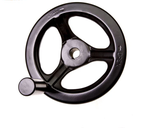
Acme Handwheel
The "3 Hand Wheel" is a precision-engineered device designed for efficient manual control in various applications. It features three ergonomic hand wheels, allowing simultaneous adjustments, enhancing convenience, and enabling precise control over machinery, instruments, or equipment. Its user-friendly design and versatility make it a valuable tool across industries, ensuring smooth and accurate operation.

Ball Valve Handwheel
The ball valve handwheel is a pivotal component in controlling fluid flow in industrial settings. This mechanical tool is designed for easy and efficient operation of ball valves, allowing precise control over the flow rate. With its ergonomic design and sturdy construction, it offers a comfortable grip and withstands demanding conditions. The handwheel's intuitive design ensures smooth manual operation, making it an essential element in various applications, including pipelines, plumbing systems, and industrial machinery.