



Hand Wheel in Valve
Hangzhou Xiaoshan Chuangye Metal Processing Co., Ltd is one of the most reliable manufacturers and suppliers of hand wheel in valve in China. If you're going to wholesale customized hand wheel in valve, welcome to get more information from our factory. For price consultation, contact us.
The working principle of the valve handwheel is relatively simple. By rotating the handwheel, the operator can move the valve stem or the mechanical parts inside the valve. Specifically, the rotation of the handwheel is converted into linear or rotary motion through the connected shaft and thread system to control the opening and closing of the valve. The valve handwheel is usually installed above the valve and is ergonomically designed for easy manual operation. The operator rotates the handwheel to achieve precise flow control and ensure the stable operation of the fluid in the pipeline system.
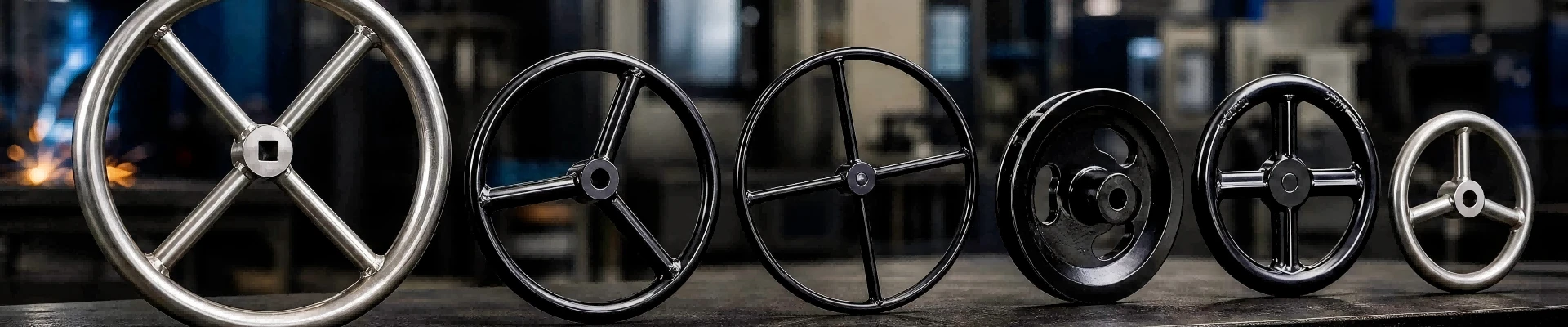
There are many materials, and common materials include stainless steel, carbon steel, etc. The specific material selection is usually determined by the working environment and the working pressure, temperature and corrosion resistance requirements of the valve. The design is usually round or polygonal with a smooth surface so that the operator can rotate it easily. The design also focuses on the feel and convenience of operation. Some handwheels are also equipped with anti-slip design or enhanced rotation levers to further improve the comfort and efficiency of operation. An important valve operating device that can achieve precise adjustment of valves in fluid pipelines through its simple manual control to ensure the safe and stable operation of the system.
Product Advantages
Economical and practical: Compared with electric or pneumatic valves, valve handwheels are less expensive and do not require electricity or air source drive, making them suitable for occasions with limited budgets or where automated control is not required.
Easy to operate: No complex tools or techniques are required, and any operator can easily get started, especially suitable for occasions where system flow and pressure are precisely controlled.
No need for power support: The valve handwheel does not rely on electricity or air source, so it can work normally in an environment without electricity and has strong adaptability.
Simple maintenance: The handwheel has a simple structure and does not require complex maintenance work, mainly regular inspection and lubrication, and the failure rate is low during use.
Diversified design: The size, shape and material of the handwheel can be customized according to different working environments and needs, with high flexibility to meet the needs of different industries.
Customization Options
Size and shape: It can be adjusted according to the specific valve or equipment requirements, including the diameter, thickness and number of spokes of the handwheel. The shape can be designed as a circle, cross or other special shapes according to user needs to meet different operational requirements and aesthetic requirements.
Surface treatment: In order to enhance corrosion resistance and aesthetics, the surface can be treated in a variety of ways, such as galvanizing, painting, powder coating, etc. These treatments not only prevent rust, but also provide additional decorative effects to adapt to different working environments.
Functional design: According to the specific operational needs of the user, it can include anti-slip textures, additional operating handles or special operating marks. Customized design can improve the operating comfort and efficiency of the handwheel and ensure its performance in actual use.
Application
Valve handwheels are widely used in many industries, mainly including:
Oil and gas industry: Used in the extraction, transportation and storage of oil and gas to control the flow and pressure of oil and gas to ensure safe transportation.
Chemical industry: In chemical plants, valve handwheels are widely used for fluid control, regulation and isolation, especially for pipeline systems involving hazardous chemicals.
Power industry: Used for the regulation of fluids such as steam, water flow, coolant, etc. in power systems to ensure the stable operation of power equipment.
Water treatment industry: In water plants and sewage treatment plants, handwheels are used to control water flow, adjust water quality, and ensure the smooth progress of the treatment process.
FAQ
1.What is the function of the valve handwheel?
The main function is to manually operate the valve and accurately adjust the fluid flow or pressure in the pipeline. It is suitable for manually controlling the valve opening, especially in environments where no electric or pneumatic control is required.
2. What types of valves are valve handwheels suitable for?
Used for valves such as gate valves, ball valves, and stop valves. When these valves need to be manually operated, the handwheel becomes an important tool for controlling fluid flow.
3. How much pressure can the valve handwheel withstand?
The pressure bearing capacity of the valve handwheel is closely related to the material, design and valve type used. Generally speaking, cast iron handwheels are suitable for low to medium pressure environments, while stainless steel or cast steel handwheels can withstand higher pressures.
4. Is the valve handwheel suitable for high temperature environments?
In high temperature environments, high temperature resistant materials such as stainless steel or heat-resistant cast iron handwheels are usually required. These materials can maintain stable performance in high temperature environments and are not easily deformed or damaged.
5. What is the difference between a manual valve handwheel and an automatic valve?
The manual valve handwheel needs to be manually rotated to control the opening and closing of the valve, while the automatic valve is usually controlled by an electric or pneumatic device.
Hot Tags: hand wheel in valve, China, suppliers, manufacturers, factory, wholesale, price, customized, Fluid Control Valve Handwheel, Gate valve actuation handwheel, Cock Valve Handwheel, Handwheel for Wharf Hydrant Valve, Chemical Plant Handwheel, Small Valve Handwheels
Previous
Red Valve Hand WheelsYou Might Also Like


Send Inquiry