


A handwheel may appear to be a simple mechanical component, but its load capacity and service life depend on several engineering factors. Material strength, wheel diameter, spoke configuration, hub design, manufacturing accuracy, and surface protection all influence how reliably an industrial handwheel performs under repeated operation.
For valve manufacturers, machinery builders, equipment distributors, and industrial procurement teams, selecting the right handwheel is not simply about choosing a suitable size. The component must transmit operating torque effectively, maintain a secure connection with the shaft, and withstand the mechanical and environmental conditions of its intended application. This guide outlines the key factors that determine the load capacity and durability of handwheels, and provides a practical comparison of common designs.
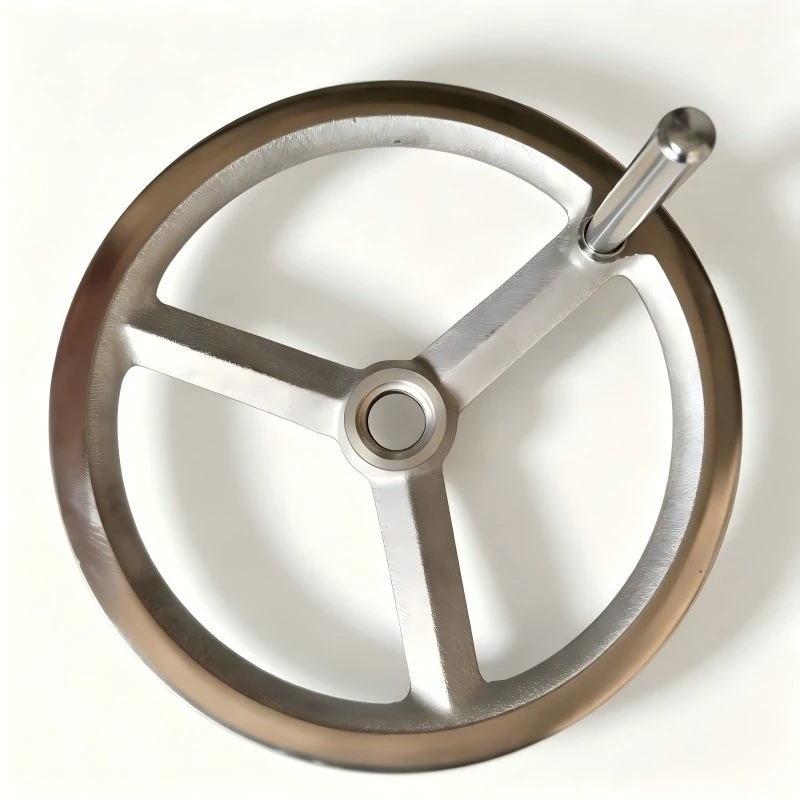
What Does Handwheel Load Capacity Mean?
Handwheel load capacity describes the mechanical loading a handwheel can withstand under defined operating conditions without unacceptable deformation, cracking, connection failure, or loss of function.
For industrial applications, buyers should distinguish between several performance requirements.
Structural load resistance: The ability of the wheel rim, spokes, and hub to withstand applied forces without permanent deformation or structural damage.
Torque transmission: The ability of the hub and shaft connection to transmit the torque required to operate a valve or adjust machinery.
Fatigue resistance: The ability to withstand repeated loading and unloading during long-term operation.
Operational durability: The ability to maintain reliable performance despite wear, vibration, moisture, temperature changes, and other environmental influences.
These properties are related but not interchangeable. A handwheel that withstands a high static force may not necessarily perform well under frequent rotation or repeated torque loading.
For this reason, a reliable industrial handwheel manufacturer should evaluate the complete design against the actual application rather than assign a universal load rating to every product.
Material Selection Determines Mechanical Strength
Material selection is one of the most important factors affecting handwheel load capacity, impact resistance, corrosion performance, and manufacturing cost.
Different materials offer different advantages, and the best choice depends on the operating environment and mechanical requirements.
| Handwheel Material | Main Advantages | Typical Applications |
|---|---|---|
| Carbon steel | Good mechanical strength, versatile fabrication, and welding suitability | Industrial machinery, welded handwheels, valve systems |
| Stainless steel | Strong corrosion resistance when the appropriate grade is selected | Chemical equipment, water treatment, food processing machinery |
| Cast iron | Good rigidity and compressive strength for suitable designs | Industrial valves and heavy-duty mechanical equipment |
| Aluminum | Low weight and good corrosion resistance in suitable environments | Equipment requiring reduced component weight |
Carbon steel is often suitable for welded handwheels because it supports established metal fabrication and machining processes. Stainless steel is worth considering when moisture, cleaning chemicals, or corrosive exposure are major concerns.
Cast iron can provide a rigid structure, but its suitability depends on the specific grade, geometry, and impact conditions. Aluminum may reduce overall weight, although its strength and wear characteristics must be evaluated against the required torque and connection design.
The key purchasing principle is to select material according to verified operating requirements, not material name alone. Buyers should confirm the exact grade, applicable material specifications, and relevant mechanical properties before approving production.
Wheel Diameter and Thickness Affect Load Distribution
Handwheel diameter influences operating leverage. For a given required torque, a larger effective radius generally reduces the tangential force an operator must apply.
The basic relationship is:
Torque = Force × Effective Radius
This means that increasing the effective radius can make manual operation easier. However, a larger diameter does not automatically mean that the complete handwheel has a higher structural load capacity.
Thickness, rim cross-section, spoke dimensions, hub geometry, and mounting conditions also affect performance. An oversized wheel with an inadequately designed hub may still fail under demanding operating conditions.
When specifying a custom industrial handwheel, buyers should consider:
Outer diameter: Must provide suitable operating leverage and fit within available installation space.
Rim thickness: Must provide adequate rigidity for the intended loading conditions.
Spoke dimensions: Must distribute forces without excessive bending or local stress concentration.
Hub dimensions: Must support the shaft connection and transmit the required torque.
Overall weight: Should remain appropriate for installation, handling, and operating requirements.
These dimensions should be evaluated together rather than optimized individually.
Structural Design Determines Torque Resistance
The structural configuration of a handwheel affects how forces travel through the rim, spokes, and central hub.
A well-designed wheel distributes operating forces efficiently and limits excessive stress at critical joints and connection points.
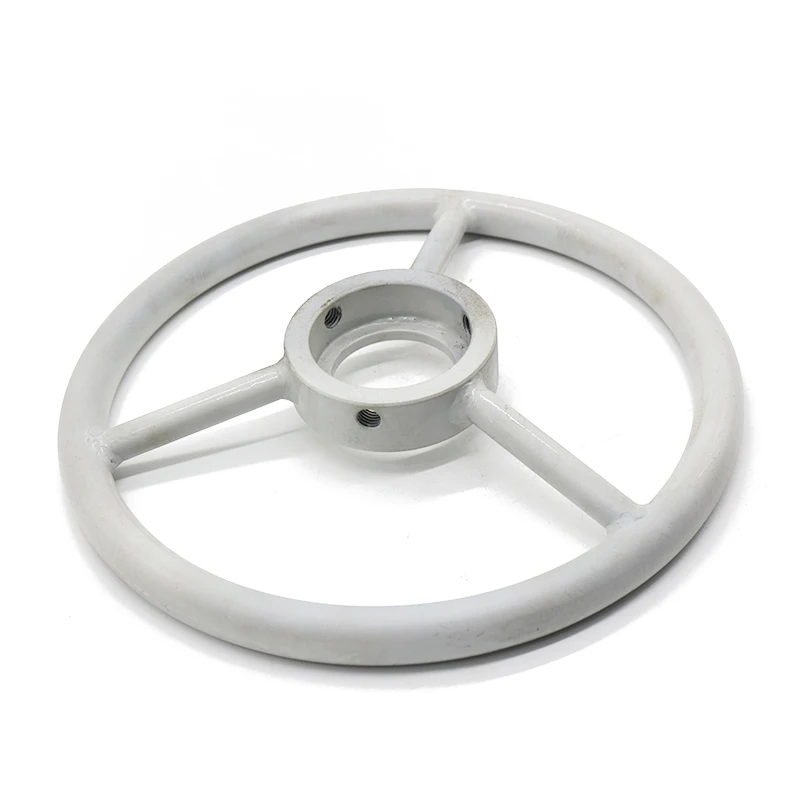
Spoked handwheels
Spoked designs provide a balance between structural support, accessibility, and material usage. Their performance depends on spoke number, cross-section, joint geometry, and the way forces are transferred to the hub.
Solid-spoke handwheels
Solid-spoke structures can provide a rigid connection between the rim and hub when appropriately dimensioned. They are worth evaluating for applications requiring consistent torque transmission.
Hollow-tube spoke handwheels
Hollow-tube structures can reduce material usage and weight while providing useful stiffness. Their suitability depends on tube dimensions, joint design, and resistance to local deformation.
Welded handwheels
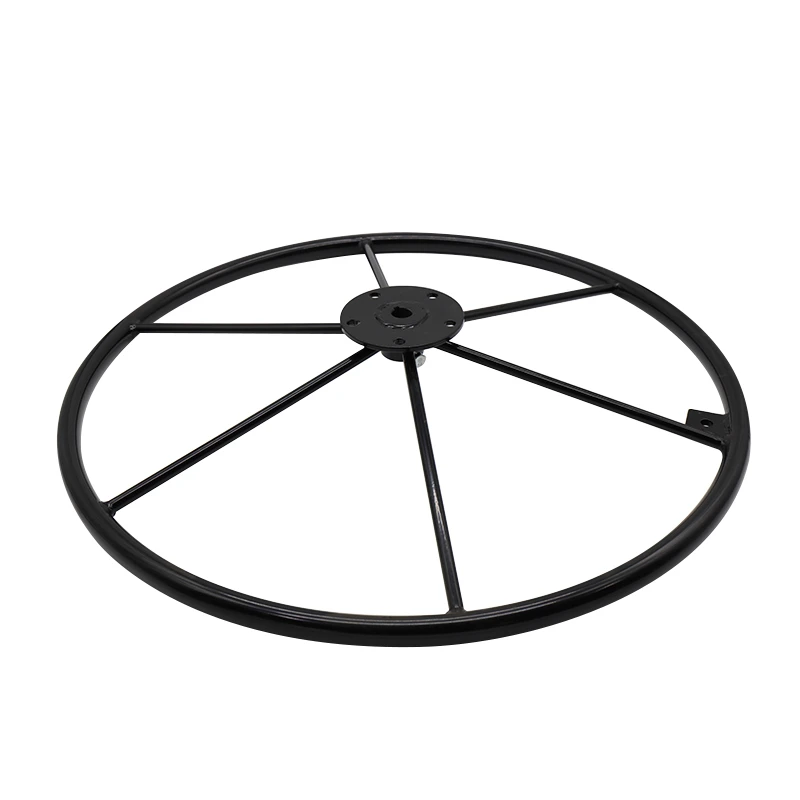
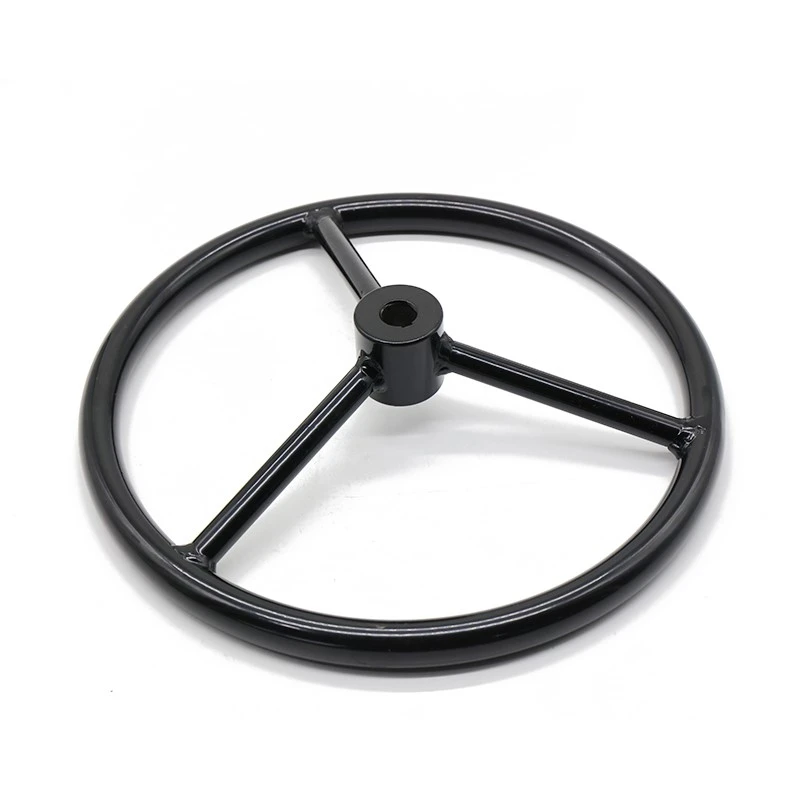
Welded handwheels allow manufacturers to combine formed or machined metal components into application-specific structures. Weld penetration, joint consistency, alignment, and distortion control are important to long-term reliability.
The strongest design is not necessarily the one containing the most material. It is the one that provides adequate strength, suitable operating characteristics, and reliable manufacturing consistency for the intended service conditions.
Hub and Shaft Connection Quality Is Essential
The hub is a critical part of an industrial handwheel because it transfers rotational force to the connected shaft or valve stem.
Even when the rim and spokes are sufficiently strong, an unsuitable bore or poorly fitted connection can cause backlash, slipping, uneven loading, or premature wear.
Common connection options include round bores, keyway bores, square bores, hexagonal bores, and D-shaped bores. The correct configuration depends on the shaft geometry and the equipment's connection requirements.
Before ordering a valve handwheel or custom metal handwheel, buyers should verify the following:
Shaft diameter and bore dimensions
Keyway dimensions, where applicable
Hub thickness and engagement length
Required fit and machining tolerances
Retention method and axial positioning
Clearance around the installed handwheel
A dimensionally accurate connection helps transmit torque consistently and reduces the risk of movement between mating components.
For OEM projects, supplying a technical drawing or a representative sample can help the manufacturer confirm critical dimensions before mass production.
Manufacturing Precision Influences Service Life
Material specifications and structural calculations cannot compensate for inconsistent manufacturing.
Poorly controlled machining may produce an inaccurate bore or uneven mounting surface. Welding distortion can affect wheel alignment, while inconsistent joints may create local weaknesses. Inadequate surface preparation can also reduce coating adhesion and shorten corrosion protection life.
A dependable handwheel manufacturing process should include several control points.
Raw material inspection: Confirm that incoming materials meet the specified grade and purchasing requirements.
Forming and fabrication: Maintain consistent dimensions during stamping, forming, and component preparation.
Welding inspection: Check joint appearance, alignment, and weld quality against the applicable acceptance criteria.
Precision machining: Verify bore dimensions, mounting interfaces, and other critical tolerances.
Final inspection: Confirm dimensional compliance, surface quality, structural integrity, and functional requirements before shipment.
Where the application demands it, buyers may also request documented torque tests, static loading tests, or cyclic endurance tests. The test method and acceptance criteria should be agreed upon before production.
Manufacturing precision is particularly important for repeat orders because consistent dimensions help customers maintain interchangeable components across equipment batches.
Surface Treatment Protects Handwheel Durability
Industrial handwheels may operate in environments involving humidity, dust, oil, cleaning agents, chemicals, or outdoor exposure. Surface treatment helps protect the component and maintain its appearance, but the correct treatment depends on the base material and service conditions.
| Surface Treatment | Main Purpose | Key Consideration |
|---|---|---|
| Powder coating | Provides a protective and decorative finish | Coating preparation, coverage, and adhesion |
| Polishing | Improves surface appearance and finish | Does not automatically provide sufficient corrosion resistance |
| Electroplating | Adds a metallic surface layer | Coating thickness, adhesion, and environmental compatibility |
| Anodizing | Creates a protective oxide layer on suitable aluminum alloys | Applicable to aluminum, not a universal treatment for all metals |
For corrosive environments, buyers should consider both the base material and the protection applied to its surface. Stainless steel may be appropriate in some wet or chemically exposed applications, but corrosion performance still depends on the grade, exposure, and maintenance conditions.
A suitable surface treatment can reduce premature deterioration, but it cannot replace correct material selection or adequate structural design.
How to Evaluate Handwheel Load Capacity for Different Applications
Industrial operating conditions vary considerably. A handwheel used for occasional machine adjustment may have different requirements from one installed on a large industrial valve that experiences frequent operation.
| Application | Main Design Priorities | Recommended Evaluation |
|---|---|---|
| General industrial machinery | Dimensional fit, operating comfort, and stable rotation | Verify diameter, bore, and required operating torque |
| Industrial valve systems | Torque transmission, hub strength, and connection security | Confirm valve operating torque and stem interface |
| Water treatment equipment | Corrosion protection and reliable operation | Evaluate material, coating, and moisture exposure |
| Chemical processing equipment | Chemical compatibility and mechanical reliability | Confirm material grade and resistance to process chemicals |
| Heavy-duty equipment | Structural stiffness and repeated-load resistance | Review geometry, critical joints, and application-specific testing |
For valve applications, buyers should also distinguish between the pressure rating of the valve and the mechanical requirements of its handwheel. A valve's rated working pressure does not, by itself, establish the load capacity of the handwheel.
The handwheel must be selected according to the torque required to operate the valve under the specified conditions. The valve manufacturer or engineering team should provide the relevant operating data.
Why Choose Hangzhou Xiaoshan Chuangye Metal Processing Co., Ltd.?
For buyers seeking a reliable industrial handwheel manufacturer, manufacturing capability, customization flexibility, and quality consistency are as important as the initial quotation.
Hangzhou Xiaoshan Chuangye Metal Processing Co., Ltd. specializes in industrial handwheels, precision machining, and sheet metal welding. Established in 2002, the company brings more than 20 years of manufacturing experience to industrial equipment and valve control applications.
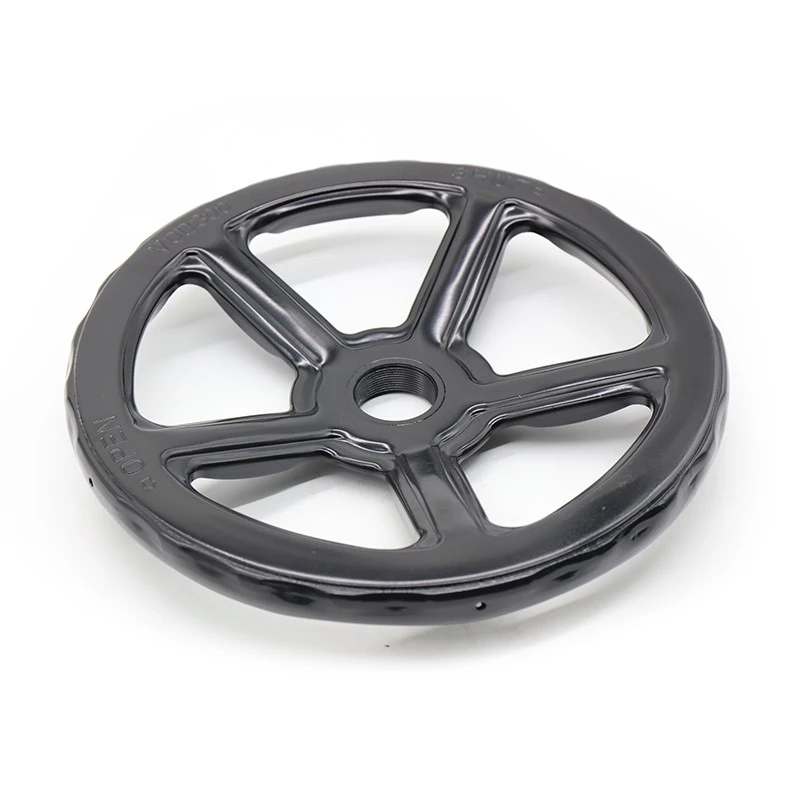
Its product portfolio includes welded handwheels, stamped handwheels, stainless steel handwheels, carbon steel handwheels, cast iron handwheels, valve handwheels, and chainwheels. These products support a range of equipment requirements, from general mechanical adjustment to industrial valve operation.
Integrated Metal Processing Capabilities
Chuangye's manufacturing capabilities include CNC turning, milling, drilling, welding, polishing, and surface finishing. Integrating these processes supports closer control over component dimensions, manufacturing coordination, and finished-product consistency.
For welded handwheels, welding quality and structural alignment are important considerations. For machined handwheels, bore accuracy and mounting dimensions directly influence assembly compatibility. Chuangye's range of metal processing capabilities provides a practical foundation for addressing these different production requirements.
Custom Handwheel Manufacturing
Standard products do not always match the mounting dimensions or operating requirements of an existing machine. Chuangye supports customized handwheel production based on customer drawings, samples, and technical specifications.
Customization options include:
Wheel diameter, thickness, and structural configuration
Solid or hollow spoke designs
Bore type, hub dimensions, and mounting interfaces
Material selection according to operating conditions
Surface finish, coating color, and logo requirements
The company's stated product diameter range extends from approximately 120 mm to 1,200 mm, subject to the selected design and technical requirements. Buyers should confirm the dimensions and manufacturing feasibility of their specific project before ordering.
Quality Management and International Supply
Chuangye operates under an ISO 9001:2015 quality management system and serves customers in Europe, North America, and other international markets. Its quality control procedures cover material inspection, manufacturing, dimensional verification, surface finishing, and final product inspection.
For equipment manufacturers and industrial distributors, these controls can help support consistent specifications across repeat orders. Protective export packaging also helps reduce the risk of surface damage during handling and transportation.
Rather than selecting a handwheel solely by price, procurement teams can evaluate Chuangye against the factors that matter to their application: structural requirements, material compatibility, connection accuracy, production consistency, and customization needs.
What Should Buyers Include in a Handwheel RFQ?
A clear request for quotation helps the manufacturer assess the application, confirm technical feasibility, and prepare a more accurate proposal.
| Required Information | Why It Matters |
|---|---|
| Application and equipment type | Establishes the operating environment |
| Required operating torque | Helps define mechanical performance requirements |
| Outer diameter and thickness | Determines installation space and operating leverage |
| Material specification | Supports strength and environmental compatibility |
| Bore and shaft connection | Ensures correct assembly |
| Surface treatment | Defines corrosion protection and finish requirements |
| Technical drawing or sample | Reduces dimensional uncertainty |
| Order quantity | Supports production planning and quotation |
| Inspection or testing requirements | Establishes acceptance criteria before manufacture |
If the exact load or torque requirement is unknown, buyers should provide the equipment model, valve specifications, operating conditions, and any available technical drawings. The engineering team can then assess what additional information is required.
Conclusion
Handwheel load capacity and durability depend on the combined performance of material, geometry, structural design, hub connection, manufacturing precision, and surface protection. No single feature can guarantee long service life under every operating condition.
For industrial valve manufacturers, machinery builders, and equipment distributors, the most effective approach is to define the actual operating requirements before selecting a handwheel. Accurate specifications and appropriate inspection criteria help reduce fitment problems, premature wear, and unnecessary replacement costs.
Hangzhou Xiaoshan Chuangye Metal Processing Co., Ltd. offers industrial handwheels and customized metal processing solutions supported by established manufacturing experience, flexible production capabilities, and an ISO 9001:2015 quality management system. Buyers can submit their drawings, samples, and application requirements to discuss a suitable handwheel design.
Frequently Asked Questions About Handwheel Load Capacity and Durability
The maximum load capacity depends on material properties, rim and spoke geometry, hub strength, shaft connection, manufacturing quality, and the type of loading involved. Static loading, operating torque, and repeated cyclic loading must be evaluated separately. Buyers should request application-specific ratings or test evidence rather than assume that all handwheels of the same diameter have the same capacity.
Carbon steel, stainless steel, and cast iron can all be suitable, depending on the design and operating conditions. Carbon steel supports versatile fabrication, stainless steel can offer better corrosion resistance in appropriate grades, and cast iron can provide useful rigidity. The best choice depends on the required mechanical strength, impact conditions, corrosion exposure, weight limitations, and budget.
No. A larger handwheel generally provides greater operating leverage for the same applied force, but structural load capacity also depends on thickness, spoke dimensions, hub design, material, and manufacturing quality. A larger wheel with an inadequately designed hub may still be unsuitable for a high-torque application.
Start with the correct material and structural design, confirm that the bore and hub match the valve stem, and select a surface treatment suited to the operating environment. Appropriate installation, routine inspection, and avoiding excessive operating force also help. For critical applications, define suitable inspection and endurance testing requirements before production.
Yes. Hangzhou Xiaoshan Chuangye Metal Processing Co., Ltd. supports customized handwheel production according to customer drawings, samples, and technical requirements. Buyers can discuss wheel dimensions, spoke structure, material, bore configuration, surface treatment, and other specifications with the manufacturer. Final feasibility and tolerances should be confirmed for each project.
Provide the application, required quantity, outer diameter, thickness, material, bore dimensions, shaft connection, and surface treatment requirements. A technical drawing or existing sample is particularly helpful. If the handwheel operates a valve, include the valve model and required operating torque where available. These details help the manufacturer evaluate compatibility, production requirements, and the appropriate quotation.


