


In the world of welding, precision and safety are of paramount importance. Whether it is a small fabrication shop or a large industrial plant, the quality of the weld depends not only on the skill level of the welder, but also on the design and performance of the welding equipment. Among the many parts that make up the overall function of welding equipment, the welding handwheel is a key component that is often overlooked despite its small size.Although it may seem like a simple mechanical element, the welding handwheel actually has important practical and safety responsibilities. It plays a key role in regulating gas flow, adjusting pressure, and controlling the opening and closing of gas cylinders, welding guns, and valves of welding equipment. This article will take a deep look at the purpose of welding handwheels, design principles, typical applications, material selection, and how to choose the right handwheel for your welding system.
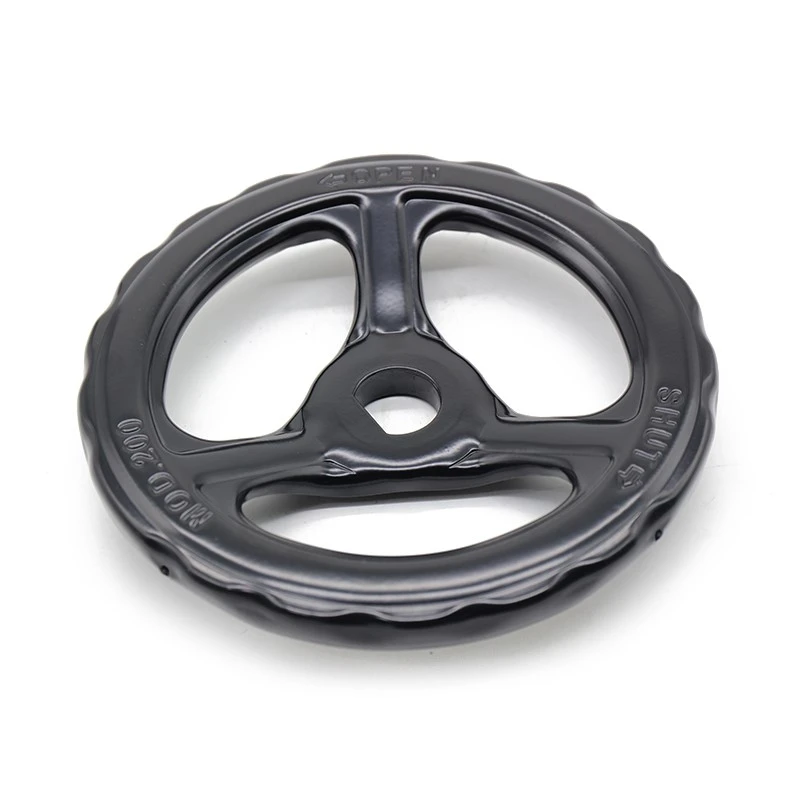
1. Understanding welding handwheels
A welding handwheel is essentially a mechanical device that allows operators to manually open and close valves or fine-tune flow, which is easy to operate and ergonomically designed. Usually, the handwheel is installed on oxygen or acetylene cylinder valves, pressure regulators, or other components that require frequent manual adjustment.
The main functions of a welding handwheel include:
Regulating gas flow: ensuring that welding shielding gas (such as argon, carbon dioxide) or fuel gas is accurately supplied to the welding gun.
Controlling pressure: achieving fine pressure regulation of the pressure regulator.
Switching valves: providing safe and convenient cylinder valve switching operations.
Emergency control: enabling quick manual closing of valves in the event of system failure or leakage.
2. Application scenarios of welding handwheels
Welding handwheels are commonly found in the following equipment systems:
Oxygen-fuel welding and cutting equipment: used for oxygen and fuel gas cylinders to accurately control the gas mixing ratio.
TIG and MIG welders: used to adjust the shielding gas supply.
Gas distribution panel: controlling multiple gas sources or switching gas sources.
Industrial pipeline and manifold systems: Control large-flow gas supply.
3. Types of welding handwheels
Depending on application requirements and system design, handwheels have different styles and functions:
Fixed handwheels: Commonly used for standard gas cylinders, directly rotating the control stem.
Adjustable handwheels: Integrated with pressure regulators or flow meters, supporting precise control.
Ergonomic handwheels: Focus on user operating comfort and suitable for frequent use.
Safety release handwheels: With locking or pressure release functions to improve safety.
Different types of handwheels meet the needs of different welding processes and environments.
4. Design and material selection
The performance of a welded handwheel depends on the material, ergonomic design, and the matching degree with the gas type and pressure.
1. Material
Aluminum alloy: Lightweight and corrosion-resistant, commonly used in portable regulators.
Brass: High strength and corrosion resistance, suitable for oxygen and fuel gas.
Steel: Suitable for high pressure environments, but heavy and easy to rust when unprotected.
Plastic (reinforced nylon or PVC): Economical, chemically resistant, suitable for low pressure applications.
Material selection should be adapted to the system's pressure level, gas properties (oxidizing, inert or flammable) and the environment in which it is used.
2. Design features
Anti-slip texture: Ensures firm operation even when wearing gloves.
Color coding: Easy to quickly identify the type of gas (e.g. green for oxygen, red for acetylene).
Torque limit: Prevents overtightening and protects the valve.
Clear marking: Shows flow direction or open and closed status.
A properly designed handwheel not only improves operating efficiency, but also enhances safety.

5. Ergonomics and safety
In industrial environments, valves are frequently operated, and ergonomic design is particularly important. Improperly designed handwheels may lead to operator fatigue, repetitive strain and inefficiency.
Key ergonomic considerations include:
Comfortable grip: rounded edges and textured surfaces reduce fatigue.
Easy to operate: large size for easy operation with gloves, suitable for narrow spaces.
Low torque requirement: easy operation without excessive force.
In terms of safety, the welded handwheel must ensure:
Sealed and leak-free: ensure that the valve is tightly closed to prevent gas leakage.
Quick response: the valve can be quickly closed at critical moments.
Durable and reliable: withstand repeated use to prevent failure.
6. Maintenance and Best Practices
To extend the life of the welding handwheel and maintain optimal performance, attention should be paid to:
Regular inspection: Observe for cracks, wear or material deterioration.
Keep clean and dry: Prevent dirt from causing the valve to jam.
Proper lubrication: Use appropriate lubricants to avoid jamming.
Timely replacement: Damaged or excessively worn handwheels need to be replaced immediately to avoid safety hazards.
Operators should receive standardized training to master the safe operation methods and emergency measures for the correct opening and closing of handwheels.
7. Practical application examples
In automated welding workshops such as automobile manufacturing or heavy machinery production, handwheels are usually integrated into the central gas supply panel, and multiple welding workstations share the gas source. Operators use handwheels to flexibly adjust the gas flow without affecting production efficiency. Selecting a high-durability handwheel in such an environment can help reduce downtime and improve the overall safety management level.
8. Company Introduction
Hangzhou Xiaoshan Chuangye Metal Processing Co., Ltd. was established in 2002. As a professional manufacturing enterprise focusing on the research and development, production and sales of handwheels, the company has always adhered to the business philosophy of "quality-oriented, customer-oriented" for many years, and is committed to providing high-quality, high-performance handwheel products and one-stop solutions for global customers.
Our core products include stainless steel handwheels, welding handwheels, stamping handwheels and aluminum alloy handwheels, which are widely used in machinery manufacturing, petrochemicals, medical equipment, water conservancy projects, power systems, food processing and other industries. With strong technical R&D capabilities and rich production experience, the company can customize the size, shape, color, surface treatment method and LOGO logo according to the specific needs of customers to meet the diversified use standards and personalized requirements of different industries.
Advanced equipment and exquisite craftsmanship
Hangzhou Xiaoshan Chuangye Metal Processing Co., Ltd. is equipped with modern manufacturing equipment, including CNC lathes, precision milling machines, high-efficiency drilling machines, automatic welding equipment, polishing machines and advanced coating equipment, ensuring that every product from design to finished product meets the strict standards of high precision, wear resistance and corrosion resistance. By continuously introducing and upgrading production processes, we have achieved high consistency and stability of products, ensuring that every handwheel can operate reliably in harsh industrial environments.
Professional team and customer service
The company has a professional team of more than 150 people, including R&D engineers, quality control experts and sales service personnel. Team members not only have deep professional knowledge and rich industry experience, but also have a rigorous work attitude and a high sense of responsibility to ensure product quality and customer satisfaction. We focus on employee training and technological innovation, continuously improve our service capabilities, and ensure that we provide customers with full-process professional services from design consultation, product manufacturing to after-sales support.
Wide application and excellent performance
Our handwheel products have been widely used in various key equipment, such as valve control, pump station equipment, chemical reactors, mixers, sluice gates and generator sets, etc., due to their excellent mechanical properties and excellent corrosion resistance. Whether it is high temperature, high pressure or highly corrosive environment, the handwheel of Hangzhou Xiaoshan Chuangye Metal Processing Co., Ltd. can ensure the accuracy and safety of equipment operation and improve the operating efficiency and reliability of the entire system.
9. Conclusion
Although the welding handwheel is a seemingly inconspicuous small accessory in the welding equipment, it plays a vital role in accurately adjusting gas flow, pressure control and safety valve operation. Reasonable material selection and design can not only improve operating comfort and efficiency, but also ensure safety and equipment life.
In the face of increasingly complex and changing welding needs, choosing high-quality, ergonomic and system-matched welding handwheels is an important guarantee for improving welding quality and ensuring operational safety. For equipment managers and operators, understanding the functions and maintenance points of welding handwheels will help achieve efficient and safe welding production.


