


In heavy machinery and industrial equipment, handwheels are not merely simple operating components, but crucial interfaces for achieving precise control, safety, reliability, and durability. In modern industry and engineering, cast iron handwheels, with their robustness, high stability, and relatively low cost, have become an essential component of various mechanical equipment, valve systems, and heavy-duty equipment. This article will introduce the main uses, applicable scenarios, and advantages of cast iron handwheels, as well as the precautions to take in practical engineering applications.

Functions and Features of Cast Iron Handwheels
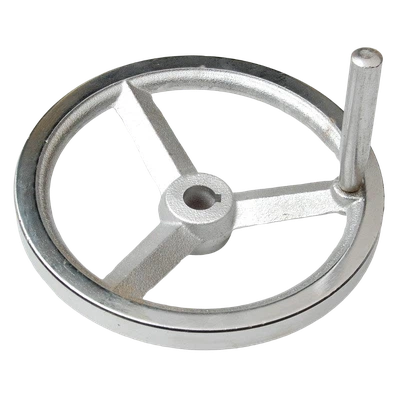
A handwheel is a device that allows mechanical control, adjustment, or motion transmission through rotation. Its core value lies in several aspects:
Precise Control and Manual Adjustment: For devices requiring fine movements, manual intervention, or limited automation, handwheels provide a simple, controllable, and intuitive way to adjust. For example, on milling machines, lathes, and grinders, handwheels adjust tool positions, worktable movements, or workpiece alignment, enabling high-precision machining.
Torque Transmission and Amplification: Larger cast iron handwheels allow operators to achieve greater torque with less effort, making it easier to adjust heavy components, move large assemblies, or operate high-pressure systems.
Ease of Use and Safety: The simple structure of handwheels eliminates the need for complex electrical controls or power supply, making them reliable and controllable in remote, hazardous, or harsh environments.
Cast iron handwheels typically feature high strength, excellent wear resistance, and a moderate weight, making them ideal in applications requiring stability and durability.
Major Applications of Cast Iron Handwheels
Machine Tools and Metalworking Equipment
In the machining industry, cast iron handwheels are widely used on milling machines, lathes, grinders, and stamping machines to fine-tune table positions, tool movements, or fixture positioning. For large or heavy machine components, cast iron handwheels provide sufficient force and stability to ensure machining accuracy and repeatability.
Valves and Pipeline Control
In industries such as petrochemical, water treatment, and power generation, cast iron handwheels are used to operate manual valves, including gate valves, globe valves, butterfly valves, and ball valves. They offer reliable, durable, and pressure-resistant control for opening, closing, and flow regulation.
Heavy Equipment and Construction Machinery
In rail transportation equipment, construction machinery, concrete mixers, cranes, and lifting devices, cast iron handwheels are favored for calibration, mechanical adjustment, and manual control. Their high load-bearing capacity and resistance to deformation ensure reliability even in harsh working conditions.
Pumps, Presses, and Fluid Control Devices
Cast iron handwheels are often used to adjust output, regulate flow, or control pressure in pumps, hydraulic systems, diaphragm pumps, filter presses, and industrial pumps. Their robustness and wear resistance ensure long-term stable operation with minimal maintenance.
Public Facilities, Building Equipment, and HVAC Systems
In HVAC, water treatment, and heating systems, hand-operated valves and controllers often use cast iron handwheels, particularly in environments requiring long-term stability and resistance to temperature or humidity changes.
Advantages and Limitations
Advantages
High Strength and Durability: Cast iron handwheels offer superior compressive strength and wear resistance compared with lighter materials, making them suitable for high-torque and heavy-load applications.
Cost-Effectiveness: Cast iron is less expensive and easier to manufacture than stainless steel or high-end alloys, offering excellent value for mass production or cost-sensitive equipment.
Stability and Safety: Their weight and solidity reduce slippage or breakage, providing reliable operation in heavy-duty or harsh environments.
Wide Applicability: Suitable for machine tools, valves, pumps, and construction equipment, covering almost all manual control and adjustment scenarios.
Limitations
Weight and Convenience: Heavier than plastic or aluminum handwheels, they may not be suitable for lightweight or fast-operating applications and could cause operator fatigue in frequent use.
Corrosion Sensitivity: Without proper anti-rust treatment, cast iron can corrode in humid or highly corrosive environments. Modern products often feature anti-corrosion coatings to extend service life.
Not Ideal for High-Sanitation Environments: In food processing or pharmaceutical settings, stainless steel handwheels are preferred due to easier cleaning and lower contamination risk.
Industry Trends and Market Demand
Despite growing automation and smart equipment adoption, handwheels remain a stable and simple manual control solution. Demand continues to be strong in manufacturing, petrochemicals, heavy machinery, and infrastructure construction and maintenance.
Manufacturers are also improving handwheel designs-incorporating ergonomic hubs and handles, corrosion-resistant coatings, customizable sizes and angles, and flexible installation options-to enhance comfort, safety, and adaptability.
Manufacturer Recommendation - Combining Quality And Customization
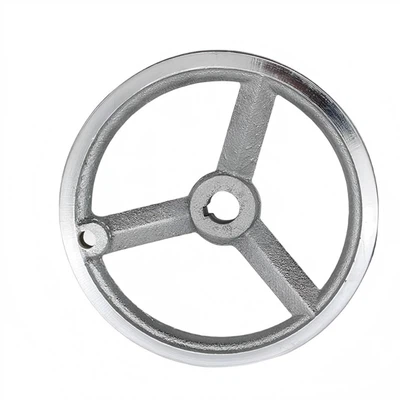
In the cast iron handwheel industry, quality and customization directly affect equipment reliability and service life. Hangzhou Xiaoshan Chuangye Metal Processing Co., Ltd. is a professional manufacturer that emphasizes precise production processes and material selection, ensuring handwheels are durable while allowing for customized designs. For example, they can adjust dimensions, thickness, handle shapes, or spoke numbers to suit different machines, valves, pumps, or heavy-duty equipment.This combination of standardized production and flexible customization allows manufacturers to maintain high-quality consistency while meeting diverse operational, torque, and durability requirements. Customers benefit from reliable handwheels that reduce maintenance costs and improve overall equipment efficiency.
Conclusion
Cast iron handwheels, with their strength, high torque capacity, and versatility, play an irreplaceable role in machining, valve control, pumping systems, and heavy machinery. Even with increasing automation, they remain a simple and reliable manual control choice.
Choosing experienced manufacturers with customization capabilities, such as Hangzhou Xiaoshan Chuangye Metal Processing Co., Ltd., ensures long-lasting performance and optimized design for specific applications, improving operational comfort and overall equipment efficiency. Cast iron handwheels will continue to serve as a practical and reliable solution in industrial production.


