


A reliable valve operation system starts with components that deliver consistent control, dependable mechanical performance, and long-term operating stability.
Valve hand wheels are essential manual operating components in industrial flow control systems. Although they may appear to be simple mechanical parts, their design directly affects operator comfort, equipment accessibility, operating reliability, and maintenance requirements. Selecting the wrong handwheel can lead to difficult operation, premature component wear, installation problems, and unnecessary replacement costs.
For valve manufacturers, industrial equipment builders, engineering contractors, and wholesale distributors, purchasing a suitable industrial valve handwheel requires more than comparing product dimensions and prices. Buyers should evaluate its operating purpose, structural design, material performance, manufacturing consistency, and supplier capabilities.

Understand the Valve Type and Operating Requirements
The first step is to identify the valve system in which the handwheel will be installed. Different valve structures have different operating mechanisms, movement requirements, and installation conditions.
For example, gate valves generally require rotational input to move the valve stem and control the flow passage. Globe valves are commonly used where flow regulation is required, while butterfly valves operate through a different quarter-turn mechanism. These differences influence the handwheel configuration and its connection to the operating mechanism.
Before selecting a manual valve handwheel, buyers should clarify:
Valve Category: Gate valves, globe valves, butterfly valves, plug valves, or other industrial valve types.
Operating Method: Direct manual operation or operation through a gearbox.
Usage Frequency: Occasional adjustment, routine opening and closing, or frequent operation.
Installation Position: Indoor equipment, outdoor pipelines, underground facilities, or restricted industrial spaces.
Operating Conditions: Whether the valve is used in water treatment, petroleum, chemical processing, or general industrial systems.
A handwheel intended for a gearbox-operated valve may have different mounting and structural requirements from one directly connected to a valve stem. Identifying these differences at the beginning helps avoid unnecessary design changes during production.
Chuangye manufactures valve handwheels for applications including gate valves, industrial machinery, water treatment equipment, and petrochemical systems, supporting different structural requirements through customized production.
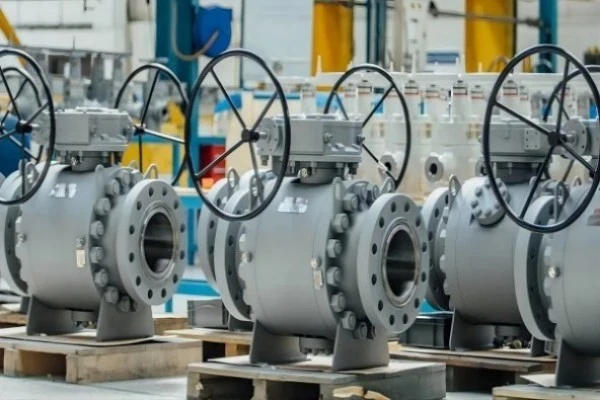
Evaluate Handwheel Geometry and Operator Accessibility
Handwheel geometry influences how easily an operator can grip, rotate, and control a valve. A design that works well on a laboratory valve may not be practical for a large industrial pipeline installation.
Buyers should consider the relationship between outer diameter, rim thickness, spoke arrangement, hub structure, and available operating clearance.
A larger diameter may provide greater leverage, but it also requires more installation space. Meanwhile, a compact design may be more appropriate for equipment with limited clearance or closely arranged pipelines.
The handwheel structure should also provide sufficient grip space. Rounded edges, suitable rim profiles, and properly finished surfaces help reduce discomfort during repeated manual operation.
Common industrial handwheel configurations include:
| Handwheel Design | Main Characteristics | Typical Application |
|---|---|---|
| Spoked Handwheel | Open structure with multiple spokes | General industrial valves |
| Solid Handwheel | Continuous wheel structure | Compact manual operating systems |
| Welded Handwheel | Fabricated metal construction | Large industrial equipment |
| Stamped Handwheel | Formed sheet metal structure | Standardized production applications |
| Handwheel with Handle | Additional gripping component | Applications requiring convenient manual rotation |
The best design depends on the equipment layout and operating requirements rather than appearance alone.
At Chuangye, different handwheel structures can be developed according to customer drawings and application specifications. Its production range covers outer diameters from φ120 mm to φ1200 mm, allowing buyers to discuss different size requirements for industrial equipment.

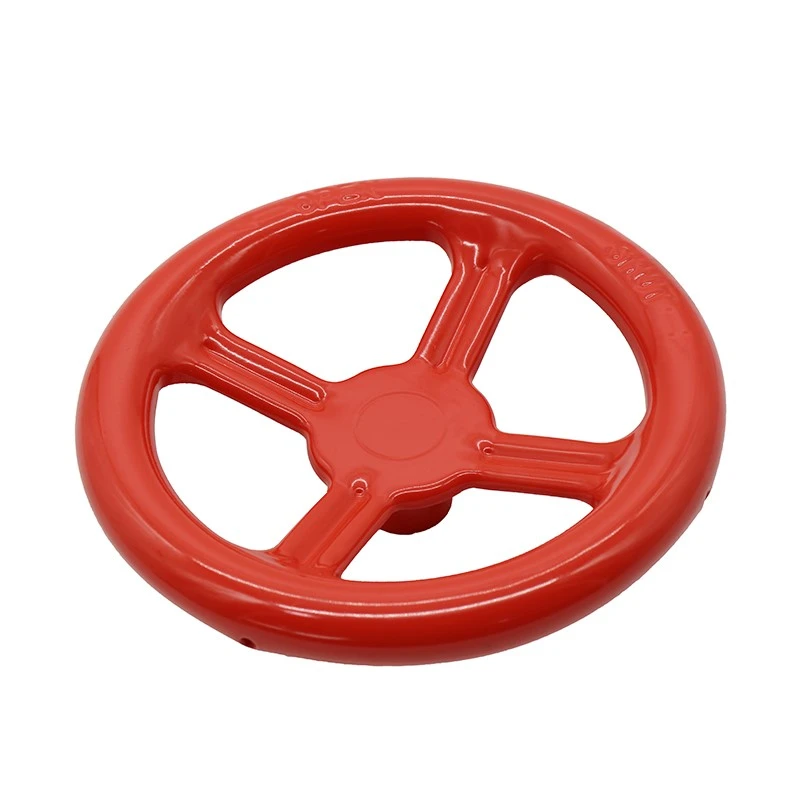


Examine Structural Strength and Load-Bearing Design
A valve handwheel must maintain its structural integrity during repeated operation. In industrial environments, components may experience continuous mechanical loading, accidental impacts, vibration, and frequent operator contact.
For this reason, buyers should examine the strength of the complete wheel assembly rather than focusing only on the thickness of its rim.
Several structural areas deserve particular attention:
Rim Stability
The outer rim should maintain its shape during normal operation. Insufficient structural rigidity can cause deformation and affect the operator's control of the valve.
Spoke-to-Rim Connections
For spoked and welded handwheels, connection quality is particularly important. Poorly executed joints can become potential weak points under repeated mechanical stress.
Hub Integrity
The central hub transfers operating input to the valve connection. Its structure and machining quality should be suitable for the intended application.
Welding Consistency
For fabricated metal handwheels, weld continuity, penetration, positioning, and finishing should be inspected according to the product design.
Chuangye integrates metal fabrication, precision machining, manual and robotic welding, and surface finishing into its manufacturing operations. These processes help maintain structural consistency across customized and repeat-production orders.
For buyers sourcing heavy-duty valve handwheels, requesting information about manufacturing processes and inspection procedures is a practical way to evaluate a supplier's production capability.
Match Material Selection to Environmental Exposure
Material selection should reflect the actual operating environment, not simply the purchase budget. Industrial valve handwheels may be exposed to moisture, chemicals, temperature changes, outdoor weather, or corrosive substances.
The following materials are commonly considered for metal valve handwheel manufacturing:
| Material | Main Advantages | Considerations | Suitable Applications |
|---|---|---|---|
| Carbon Steel | Good mechanical strength and fabrication flexibility | Requires appropriate corrosion protection | General industrial valves |
| Stainless Steel | Good corrosion resistance and durability | Higher material cost | Water treatment, food-related equipment, and corrosive environments |
| Cast Iron | Rigid structure and good wear resistance | More brittle than many steel alternatives | Traditional industrial valve systems |
| Fabricated Steel | Flexible structural design and customization | Welding quality requires control | Large and non-standard handwheels |
For example, stainless steel valve handwheels may be considered for installations exposed to moisture or certain corrosive media. Carbon steel is often suitable for general industrial applications when an appropriate protective finish is specified.
However, material selection should account for the actual chemical exposure, temperature range, mechanical requirements, and maintenance plan. No single material is suitable for every industrial environment.
Hangzhou Xiaoshan Chuangye Metal Processing Co., Ltd. offers carbon steel, stainless steel, and cast iron handwheel options, with different manufacturing processes available to meet project requirements.
Check Surface Protection and Manufacturing Finish
Surface treatment is an important purchasing consideration because it influences corrosion protection, product appearance, and maintenance requirements.
Industrial valve handwheels may be installed in environments where moisture, dust, chemical splashes, and outdoor exposure gradually affect exposed metal surfaces. Selecting an appropriate finish can help reduce surface deterioration during service.
Common surface treatment options include:
Powder Coating: Provides a protective and decorative coating, with different colors available for equipment identification and product consistency.
Electroplating: Applies a metallic coating to improve surface protection and appearance, depending on the selected plating system.
Painting: Offers flexible color selection and can provide additional environmental protection when the coating system is properly specified.
Polishing: Improves surface smoothness and appearance, particularly for stainless steel components.
Sandblasting: Helps prepare the surface before subsequent finishing processes.
Buyers should also check whether the selected finish is compatible with the base material and intended working environment.
For OEM valve manufacturers, coating color, surface texture, logo marking, and finishing consistency may be important for matching existing equipment designs.
Chuangye supports customized surface finishing, including powder coating, electroplating, polishing, and other treatments according to project specifications.
Review Quality Control and Production Consistency
A supplier's ability to manufacture one acceptable sample does not automatically guarantee consistent quality across a large production order.
For distributors and valve manufacturers purchasing in batches, production consistency is particularly important. Differences in dimensions, welding quality, surface appearance, or mounting details can create additional assembly work and affect downstream manufacturing efficiency.
Before placing an order, buyers should understand how the manufacturer controls quality throughout production.
A practical inspection framework includes:
| Production Stage | Inspection Focus | Procurement Value |
|---|---|---|
| Incoming Materials | Material specifications and raw material condition | Reduces material-related risks |
| Metal Fabrication | Forming accuracy and structural dimensions | Supports design consistency |
| Welding and Machining | Joint quality and critical dimensional accuracy | Improves assembly reliability |
| Surface Treatment | Coating appearance and finishing quality | Maintains product consistency |
| Final Inspection | Dimensions, appearance, structure, and functional quality | Verifies order requirements |
| Packaging | Protection and packing condition | Reduces transportation damage |
Working with a manufacturer operating under a documented quality management system can make supplier evaluation more transparent.
Chuangye operates under the ISO 9001:2015 quality management system. Its quality procedures cover raw material inspection, controlled manufacturing, final product inspection, and packaging checks. The company also highlights continuous manufacturing improvement and engineering development as part of its quality commitment.
For long-term purchasing arrangements, buyers should confirm that inspection criteria are documented and consistent with approved samples and technical specifications.
Choose a Manufacturer with Customization and Supply Capabilities
The final consideration is the manufacturer's ability to support the complete purchasing process, from technical communication to repeat production.
Standard valve handwheels may be suitable for common equipment models. However, many industrial projects require non-standard dimensions, special mounting structures, different materials, or specific surface finishes.
An experienced valve handwheel manufacturer should be able to evaluate these requirements and provide practical manufacturing recommendations.
When comparing suppliers, consider the following capabilities:
In-House Manufacturing Processes
A supplier with integrated fabrication, machining, welding, and finishing capabilities can better coordinate different production stages and maintain process control.
Engineering and Customization Support
The manufacturer should be able to review drawings, discuss structural feasibility, and confirm important dimensions before production begins.
Production Range
A broad product range makes it easier to source different handwheel specifications from one manufacturing partner.
OEM and Bulk Order Support
For valve manufacturers and industrial equipment companies, stable batch production and repeat-order consistency are important for maintaining their own production schedules.
Communication and Delivery Coordination
Clear technical communication, order confirmation, packaging arrangements, and delivery coordination all contribute to a smoother procurement process.
Why Consider Hangzhou Xiaoshan Chuangye Metal Processing Co., Ltd.?
Founded in 2002, Hangzhou Xiaoshan Chuangye Metal Processing Co., Ltd. specializes in industrial handwheels, precision machining components, and sheet metal welding.
Its manufacturing capabilities cover several product categories:
Product Diversity: Stainless steel handwheels, welded handwheels, stamped handwheels, cast iron handwheels, chain wheels, and customized metal handwheels.
Flexible Manufacturing: CNC turning, milling, drilling, metal fabrication, welding, polishing, and coating processes.
Dimensional Customization: Supports different outer diameters, thicknesses, hub configurations, bore sizes, keyways, and connection structures.
OEM Project Support: Develops handwheel solutions based on customer drawings, samples, and technical specifications.
Quality Management: Production under ISO 9001:2015 quality management requirements, with inspection procedures throughout manufacturing.
Industrial Application Experience: Products serve valve systems, water treatment equipment, petroleum and chemical processing, and general industrial machinery.
Rather than relying exclusively on standard product specifications, Chuangye works with customers to evaluate the application and manufacturing requirements of each project. This approach helps valve manufacturers and industrial equipment buyers obtain handwheels that are better aligned with their equipment designs.
For companies looking for a reliable custom valve handwheel supplier, direct communication with the manufacturer can also simplify technical confirmation and long-term purchasing arrangements.
Frequently Asked Questions About Buying Valve Hand Wheels
A valve handwheel is specifically designed for manually operating valve mechanisms, including opening, closing, or adjusting fluid flow. A general industrial handwheel may also be used for machine positioning, mechanical adjustment, and equipment control. Valve handwheels must match the operating mechanism and connection requirements of the relevant valve system.
Compatibility depends on the complete mounting arrangement. Buyers should check the central bore, hub dimensions, shaft connection, mounting position, and surrounding clearance. Providing an equipment drawing or an existing handwheel sample allows the manufacturer to verify critical dimensions before production.
Welded handwheels can be suitable for large industrial valve applications because their fabricated structures allow flexibility in diameter, rim configuration, spoke arrangement, and overall dimensions. Their suitability depends on structural design, material specifications, welding quality, and the actual operating load.
Powder coating and suitable protective painting systems are commonly considered for outdoor applications. Stainless steel may also be appropriate where corrosion resistance is important. The final selection should consider humidity, salt exposure, chemicals, temperature, and the required maintenance interval.
Yes. Custom valve handwheels can be manufactured according to technical drawings, existing samples, and equipment requirements. Buyers can specify outer diameter, thickness, hub structure, bore configuration, material, surface treatment, color, and logo requirements. Hangzhou Xiaoshan Chuangye Metal Processing Co., Ltd. supports drawing-based customization and OEM production.
Look beyond the quoted unit price. Evaluate the manufacturer's experience, available materials, fabrication and machining capabilities, dimensional control, quality management system, customization support, production consistency, and communication efficiency. A manufacturer with integrated metal processing capabilities can provide more coordinated support for customized and repeat-production projects.
Conclusion
Choosing the right valve handwheel requires a comprehensive evaluation of operating requirements, geometry, structural strength, material selection, surface protection, manufacturing quality, and supplier capabilities.
For industrial buyers, the objective should be to source a handwheel that fits the valve system, supports reliable manual operation, and maintains consistent quality throughout its intended service life.
Hangzhou Xiaoshan Chuangye Metal Processing Co., Ltd. combines more than two decades of manufacturing experience with metal fabrication, precision machining, welding, and customized production capabilities. From standard industrial valve handwheels to drawing-based OEM solutions, Chuangye supports valve manufacturers, distributors, and industrial equipment companies with practical metal handwheel manufacturing services.
If you are sourcing industrial valve handwheels, custom metal handwheels, or OEM valve handwheel solutions, contact Chuangye to discuss your drawings, material requirements, and production specifications.


