


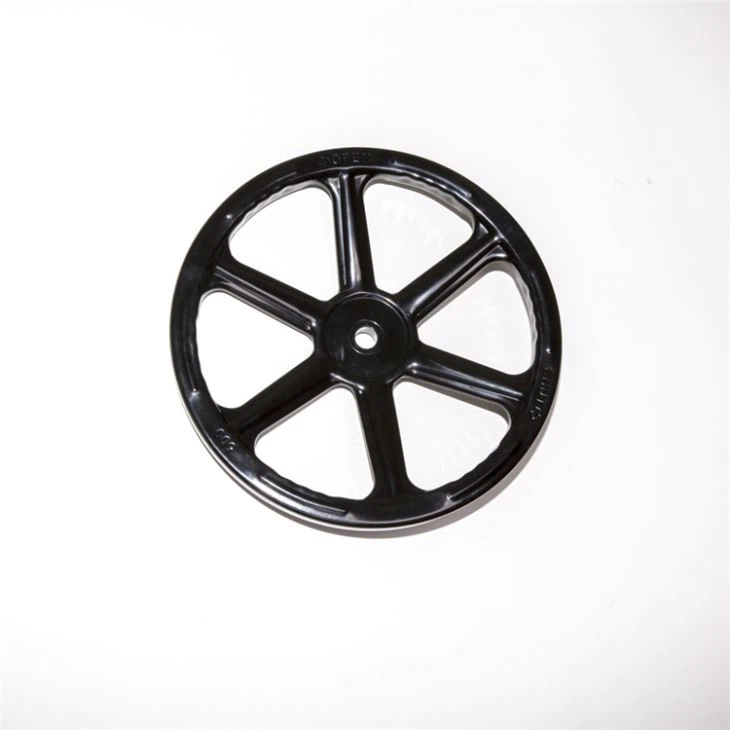
In the field of mechanical processing, the performance of stamping handwheels as core operating components directly affects production efficiency and product quality. The patent released by Anhui Yingliu Electromechanical in 2025 shows that through the customized design of threaded rods and pressure plates, stamping handwheels can achieve the precision of local stamping of stainless steel sheets to 0.01mm, and the mold debugging time is shortened by 40%. This case confirms the industry consensus: the customization of stamping handwheels is the key to solving complex stamping needs. This article will analyze its customization possibilities from three dimensions: technical foundation, application scenarios and industry trends, and combine the latest industry trends and practical cases to reveal how this technology reshapes manufacturing efficiency.
Contents
1. Customized technical foundation
2. Analysis of actual application scenarios
3. Industry trends and challenges
1. Customized technical foundation
1.1 Flexibility in material selection
Mainstream applications of carbon steel and cast iron: Traditional stamping handwheels mostly use carbon steel or cast iron, because of their low cost and strong wear resistance, they are suitable for ordinary industrial scenarios. For example, the diameter of the carbon steel handwheel of a valve fitting factory is optional from 50mm to 500mm, and the inner hole supports standard specifications such as square hole and hexagonal hole, meeting 90% of conventional needs.
Breakthrough of special materials:
Aluminum alloy: Hangzhou Luowei Industrial's forging and stamping combination die uses high-strength aluminum alloy handwheel, which is 60% lighter than cast iron. At the same time, the adjustment sensitivity is improved through the screw nut transmission, which is suitable for high-speed stamping scenarios.
Stainless steel: Medical equipment manufacturers use 316L stainless steel handwheels, and the surface is electrolytically polished to meet the requirements of GMP clean workshops and avoid metal particle contamination.
Composite materials: An aviation parts company tried carbon fiber reinforced plastic (CFRP) handwheels, which reduced the weight by 70% while maintaining strength, but the cost is high and is currently only used for high-end customization.
1.2 Modularity of structural design
Size and shape customization:
Diameter range: Conventional handwheel diameter is 50-500mm, and special needs can be expanded to 1000mm. For example, a 1200mm cast iron handwheel customized by a chemical company is used for manual control of large reactors and needs to be matched with a hydraulic power assist device.
Handle shape: The EUCHNER HBA series handheld operating unit adopts an arc-shaped handle, and the non-slip rubber material reduces the operating force from 15N to 8N, reducing operator fatigue.
Transmission system optimization:
Threaded rod accuracy: In the patented design of Anhui Yingliu Electromechanical, the handwheel drives the pressure plate to fix the stainless steel sheet through a threaded rod, with an adjustment accuracy of 0.01mm, which is suitable for precision stamping.
Gear set modulus: The handwheel customized by a certain automobile mold factory uses a helical gear with a modulus of 2.5, which increases the transmission efficiency by 15% and reduces the noise by 10 decibels.
1.3 Feasibility of intelligent integration
Sensor and data feedback:
Pressure sensor: The intelligent handwheel of the Freightos platform integrates a pressure sensor to monitor the stamping pressure in real time and automatically shut down when abnormal. After application in a 3C product production line, the defect rate dropped from 5% to 0.8%.
Position encoder: The handwheel of the SEYI servo punch press has a built-in 200 sets of mold parameter memory function, which can switch the mold height with one button, and the mold change time is shortened from 2 hours to 30 minutes.
Internet of Things and Remote Control:
5G Industrial Module: The Lantu Automobile Stamping Workshop is connected to the cloud platform through the handwheel, and engineers can remotely adjust the pressure parameters, and the abnormal downtime rate of the equipment has dropped by 67%.
AR Assisted Debugging: The AR remote operation and maintenance system developed by Taili CNC can link the handwheel with the glasses equipment, so that engineers can virtually view the internal structure of the equipment, and the debugging efficiency is improved by 50%.
2. Analysis of actual application scenarios
2.1 Automobile manufacturing: high precision and durability requirements
Large cover stamping: A 300mm diameter cast iron handwheel customized by an automobile factory, with a hydraulic system to achieve 600 tons of pressure adjustment, the mold life is extended from 100,000 times to 300,000 times.
New energy battery shell processing: CATL uses anti-static aluminum alloy handwheels to avoid safety risks caused by static electricity, and at the same time achieves a stamping accuracy of 0.02mm through servo motors.
2.2 Electronic components: miniaturization and anti-static design
Semiconductor packaging: A chip factory customized a nylon handwheel with a diameter of 80mm, with an anti-static coating sprayed on the surface to prevent static electricity from damaging the chip, and a positioning accuracy of 0.005mm is achieved with the CCD vision system.
Precision connector stamping: Foxconn's micro handwheel uses titanium alloy + ceramic bearings, with a minimum adjustment of 0.001mm, which meets the requirements for connector pin stamping with a spacing of 0.1mm.
2.3 Medical devices: cleanliness and anti-corrosion requirements
Implant processing: Medtronic customized 316L stainless steel handwheel, the surface is electrolytically polished, with a roughness of Ra≤0.4μm, to avoid metal particle contamination, in line with ISO 13485 standards.
Surgical instrument stamping: A medical equipment factory uses POM plastic handwheels, which are resistant to chemical corrosion and can withstand ethylene oxide sterilization, and have a service life that is three times longer than traditional materials.


3. Industry trends and challenges
3.1 Integration of digitalization and automation
Popularization of smart handwheels: Freightos predicts that by 2025, 30% of stamping handwheels will integrate sensors and IoT functions to achieve real-time monitoring of production data and remote operation and maintenance.
AI algorithm optimization: The handwheel of the SEYI servo punch press is combined with an AI algorithm to automatically match the optimal stamping parameters, increasing the material molding qualification rate from 85% to 99%.
3.2 Application of lightweight and environmentally friendly materials
Carbon fiber composite materials: The carbon fiber handwheel of an aviation parts company weighs only 1/5 of traditional cast iron. At the same time, 3D printing is used to achieve integrated molding of complex structures and reduce assembly processes.
Recyclable materials: A valve factory uses recycled aluminum handwheels, with a material recycling rate of 95%, which complies with the EU RoHS directive.
3.3 Balance between customization cost and standardization
Modular design reduces costs: Nantong Zhengya Plastic Products Factory launched the "basic module + customized component" model, shortening the handwheel customization cycle from 30 days to 7 days, and reducing costs by 40%.
Promotion of industry standards: China Machine Tool Industry Association is formulating the "Stamping Handwheel Customization Technical Specifications" to unify interface standards and material performance requirements, which is expected to be released in 2026.
Summary
The customization of stamping handwheels has been upgraded from "special demand response" to "core means of efficiency improvement". Through material innovation, structural optimization, and intelligent integration, it not only solves the personalized needs of different industries, but also promotes the manufacturing industry to develop in the direction of high precision, low energy consumption, and unmanned. In the future, with the deep integration of AI, the Internet of Things, and lightweight materials, stamping handwheels will become the key fulcrum of the Industrial 4.0 era, and enterprises need to find a balance between customization flexibility and standardized costs in order to build core advantages in global competition.


