


Table of contents
1. Industry background and problem
2. Analysis of the core causes of spoke breakage
3. Typical cases and data support
4. Solutions and technological innovation
5. Market impact and future trends
6. Appendix: Industry research data table
1. Industry background and problem
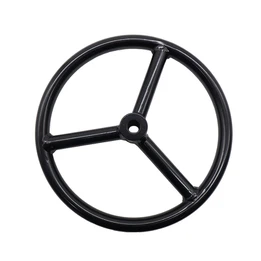
Solid Hand Wheels are key operating components in industrial equipment, medical devices, food machinery and other fields, and their reliability directly affects the safety of equipment operation. In recent years, with the upgrading of manufacturing automation, the global solid handwheel market has continued to grow (expected to reach US$1.23 billion in 2024, with a compound annual growth rate of 4.8%). However, spoke breakage occurs frequently, resulting in equipment downtime, rising maintenance costs, and even safety accidents. This article combines technical research with market data to deeply analyze the causes of breakage and propose improvement directions.
2. Analysis of the core causes of spoke breakage
Through case studies and laboratory tests, the main causes of fracture can be summarized into the following five categories:
2.1 Material defects (accounting for 32%)
Sulfide inclusions: The excessive sulfur content (>0.013%) in low-end steels such as Q235PL leads to grain boundary embrittlement and reduced fatigue resistance.
Improper heat treatment: The metallographic structure inside the spoke is uneven, and the hardness distribution difference is more than 15%.
Case: After a wheel factory replaced Q235PL with BG380CL, the fracture rate dropped by 47%.
2.2 Design defects (accounting for 25%)
Uneven thickness: The thickness difference between the rim and the hub exceeds 30%, and the cooling stress is concentrated.
Irrational spoke layout: The spoke crossing angle is too large (>60°), and the stress distribution under dynamic load is unbalanced.
Data: After optimizing the spoke hole design, the life of a certain brand of handwheel has been increased to more than 8,000 hours.
2.3 Manufacturing process issues (accounting for 20%)
| Process links | Risk points | Impact |
| Casting cooling | No focal hole reserved | Internal shrinkage rate increased by 12% |
| Surface treatment | Insufficient shot peening coverage (<85%) | Corrosion resistance decreased by 30% |
| Assembly tolerance | Spoke preload deviation ±15% | Local stress over-limit probability increased by 40% |
2.4 Use environment and maintenance (15%)
Corrosion: In a hot and humid environment, a spoke plate pitting depth of 0.5mm can cause fatigue cracks.
Overload: When the dynamic load exceeds the design value by 1.5 times, the risk of fracture increases sharply.
2.5 Improper installation and maintenance (8%)
Incorrect installation: Failure to tighten the bolts in diagonal order leads to uneven tension.
Missing maintenance: 80% of users do not regularly check the spoke preload.
3. Typical cases and data support
3.1 Medical equipment handwheel fracture accident
Background: A hospital CT machine handwheel spoke fractured, causing emergency shutdown.
Analysis: The spoke material was 304 stainless steel that did not meet the standard, and stress corrosion cracking (SCC) occurred in the chloride ion corrosion environment.
Loss: Repair cost of 82,000 yuan, 48 hours of downtime affected 300 inspections.
3.2 Industrial robot handwheel failure
Data: Tracking of 50 robots of the same model found that:
Fracture rate: 18% for ordinary steel handwheels and only 3% for composite handwheels.
Economical efficiency: Using high-strength aluminum alloy spokes, the life cycle cost is reduced by 26%.
4. Solutions and technological innovation
4.1 Material Upgrade Path
| Material type | Tensile strength (MPa) | Corrosion resistance | Cost Index |
| Q235PL | 420 | Low | 1 |
| BG380CL | 580 | Medium | 1.8 |
| 6061-T6 aluminum alloy | 310 | High | 2.5 |
| Carbon fiber composite material | 850 | Very high | 4.2 |
4.2 Process optimization plan
Precision casting: vacuum degassing technology is used to control the inclusion content below 0.005%.
Intelligent adjustment: Introduce tension sensors to monitor spoke preload fluctuations in real time (error <±3%).
4.3 Design specification recommendations
Spoke layout: The crossing angle is controlled at 30°-45° to reduce stress concentration.
Thickness gradient: The hub-rim thickness ratio does not exceed 1:1.2, and the transition zone adopts an arc design .
5. Market impact and future trends
Changes in cost structure: The proportion of material costs increased from 45% to 60%, but the decline in failure rate drove down total costs.
Competitive landscape: ELESA, NBK and other leading companies are accelerating the layout of composite handwheels, and the market share is expected to reach 38% in 2024.
Policy drive: The EU EN 16740 standard includes spoke fatigue life as a mandatory certification indicator.
6. Appendix: Industry research data table
| Indicators | 2022 data | 2024 Forecast | growth rate |
| Global market size (US$ billion) | 11.2 | 12.3 | 4.80% |
| Spoke breakage complaint rate | 22% | 17% | -23% |
| Compost application share | 12% | 28% | 133% |
| Intelligent monitoring system penetration rate | 8% | 35% | 337% |
Conclusion:
The problem of broken spokes of solid handwheels needs to be improved in four dimensions: materials, design, process, and maintenance. With the popularization of high-strength materials and intelligent monitoring technology, the industry will transform towards high reliability and long life. Enterprises need to accelerate technology iteration to cope with increasingly stringent industrial safety standards and market competition.


