


In the pipeline network of industrial production, valves control the flow direction, flow rate and pressure of various fluid media. The valve handwheel is the direct tool to open this control "switch", and its role is crucial. From petrochemicals to water supply and drainage treatment, from electric power to food processing, valve handwheels are widely used in various fields, silently ensuring the smooth operation of industrial processes. In-depth exploration of the main role of valve handwheels is of great significance to improving industrial production efficiency, ensuring safe production and promoting technological innovation in the industry.
Table of contents
1. Precise operation: control the fluid path
2. Status indication: feedback valve information
3. Convenient maintenance: assist valve maintenance
4. Industry development: promote handwheel innovation
5. Conclusion
1. Precise operation: control the fluid path
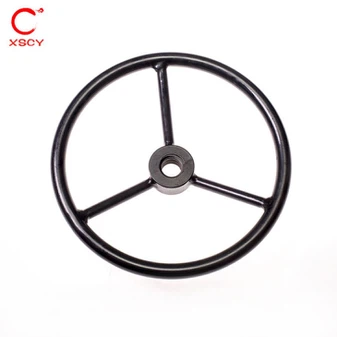
1. Open and close the valve
The most basic and intuitive function of the valve handwheel is to open and close the valve. Whether it is a manual gate valve, a stop valve, or a ball valve, the operator rotates the handwheel to drive the valve stem to move, thereby controlling the position of the valve's opening and closing parts (such as the gate, valve disc, etc.). Taking the common manual gate valve as an example, when the handwheel is rotated clockwise, the valve stem drives the gate to move downward, gradually closing the valve and blocking the passage of the fluid in the pipeline; when the handwheel is rotated counterclockwise, the gate rises, the valve opens, and the fluid passes smoothly. In the oil pipeline, when a certain section of the pipeline needs to be maintained and repaired, the operator will use the valve handwheel to close the corresponding valve to ensure that there is no fluid flow in the operating area, creating safe conditions for maintenance work.
2. Adjust the flow rate
In addition to the fully open and fully closed states, the valve handwheel can also be used to accurately adjust the valve opening to control the flow of the fluid in the pipeline. In the chemical production process, the reactor requires accurate raw material flow to ensure the stability of the chemical reaction. At this point, the operator can slowly rotate the Hand Wheel In Valve to adjust the valve to the appropriate opening, so that the raw materials enter the reactor at the set flow rate. The relationship between the handwheel rotation angle and flow rate change varies for different types of valves. For example, the handwheel rotation angle of a butterfly valve is approximately linearly related to the flow rate, while the flow rate change of a ball valve is more sensitive at a small opening. The operator needs to skillfully use the handwheel to accurately adjust the flow rate according to the actual working conditions and valve characteristics.
2. Status indication: feedback valve information
1. Position markings
The valve handwheel usually has obvious position markings to intuitively display the open or closed status of the valve. Common handwheels are marked with the words "OPEN" and "CLOSE", and some are distinguished by color, such as green for open and red for closed. On the edge of the handwheel, there are usually scales or pointers to indicate the opening size of the valve. In the pipe gallery of a large factory, many valves are neatly arranged. Operators can quickly judge the status of each valve from a distance by the handwheel mark, without having to approach one by one, which greatly improves the inspection efficiency. In an emergency, such as a fire or leakage accident, rescuers can also quickly find the valve that needs to be closed according to the handwheel mark and take emergency measures in time.
2. Operation feel feedback
Experienced operators can also judge the operating status of the valve by the feel when rotating the handwheel. Under normal circumstances, the handwheel rotates smoothly and with moderate resistance. When there is a fault inside the valve, such as wear of the valve seat, damage to the seal, or jamming of foreign objects, the rotation of the handwheel becomes extremely difficult, and even jamming occurs. In the heating network, if a valve hand wheel feels unusually heavy when operated, it may mean that impurities are accumulated inside the valve, affecting the normal opening and closing of the valve. At this time, timely maintenance is required to avoid affecting the heating effect. This method of feedback on the valve status by hand is particularly important in some old facilities or pipeline systems in remote areas where electronic monitoring equipment cannot be installed.
3. Convenient maintenance: assist valve maintenance
1. Advantages of manual operation
In industrial production, although automated control technology is becoming increasingly popular, the manual operation function of the Gate Valve Hand WheelS is still indispensable. When the automated control system fails, power outages, or special debugging is required, the operator can manually operate the valve handwheel to ensure that the production process is not affected. In some small factories or temporary workplaces, manual valves are operated with handwheels because they are simple, reliable, and low-cost, making them the preferred way to control fluids. In large sewage treatment plants, automated valve control systems occasionally fail due to software failures or communication interruptions. At this time, the operator quickly switches to manual mode and continues to control the sewage treatment process through the valve handwheel, avoiding environmental accidents such as sewage overflow.
2. Maintenance positioning assistance
The valve handwheel also plays an important role in the valve maintenance process. When maintenance personnel disassemble, clean, replace parts, and other maintenance work on the valve, the handwheel can be used as an auxiliary tool for positioning and operation. For example, when removing the valve stem, the valve stem is adjusted to the appropriate position by rotating the handwheel, which is convenient for maintenance personnel to perform disassembly operations. After installing a new seal, maintenance personnel can check whether the valve opens and closes smoothly by rotating the handwheel to ensure the quality of maintenance work. At the same time, the existence of the handwheel also facilitates maintenance personnel to perform regular maintenance on the valve, such as applying lubricating oil and checking the tightness of the connection parts.
4. Industry development: promote handwheel innovation
1. Material upgrade
With the increasing complexity and harshness of the industrial production environment, the requirements for the material of valve handwheels are also getting higher and higher. Traditional cast iron and carbon steel handwheels are prone to rust and corrosion in some pipeline systems with highly corrosive media, affecting operating performance and service life. To this end, the industry continues to develop and apply new materials. For example, the use of corrosion-resistant materials such as stainless steel and aluminum alloy to manufacture handwheels effectively improves the corrosion resistance of handwheels in harsh environments. In some food, beverage and pharmaceutical industries, in order to meet the requirements of hygiene standards, food-grade plastics or special alloys are also used to make handwheels to ensure that there will be no pollution to product quality.
2. Intelligent integration
Driven by the wave of intelligence, valve handwheels are gradually developing in the direction of intelligence. Some new valve handwheels are integrated with sensors that can monitor the rotation angle, operating force and operating status of the handwheel in real time, and transmit these data to the monitoring system in the central control room. Through data analysis, managers can predict possible valve failures in advance, arrange maintenance in time, and improve the reliability and operating efficiency of equipment. In addition, some intelligent handwheels also support remote operation functions. Operators can remotely control the rotation of the handwheel through a computer or mobile phone APP in the control room to achieve remote control of the valve, greatly improving the convenience and flexibility of operation.
The valve handwheel, a seemingly simple industrial component, has become an indispensable part of the industrial pipeline system with its rich and critical functions. From precise control of fluids to intuitive feedback of valve status, from ensuring emergency operations to assisting maintenance and repairs, and now leading industry innovation, the valve handwheel has always closely followed the needs of industrial production and continued to evolve and develop. In the future, with the continuous advancement of science and technology and the continuous upgrading of industrial production, the valve handwheel will surely provide a solid guarantee for the efficient and safe operation of industrial production in a more advanced form, and continue to write an important chapter in the industrial field.


